|
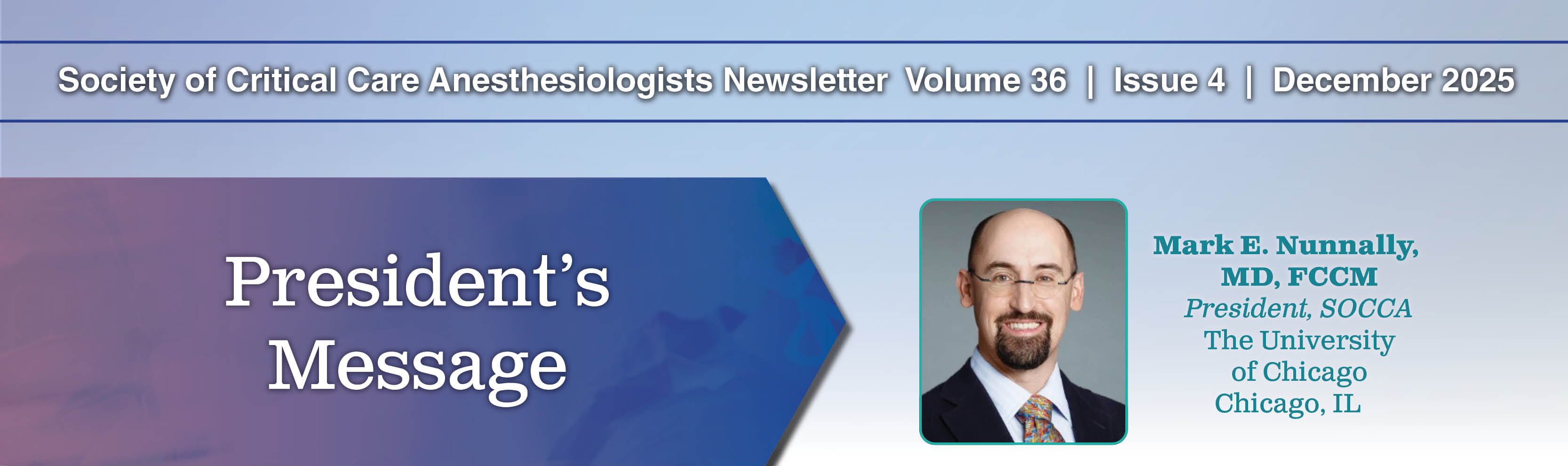
President’s Messageby Mark E. Nunnally, MD, FCCM Volume 36 | Issue 4 | Dec 2025 Welcome to the mechanical circulatory support (MCS) edition of the Interchange. I will briefly directly address the topic and then, indulge myself in more philosophical musings. MCS has been “emerging” for decades, but the current situation underscores its permanent role in modern critical care. Various technologies have contributed to solutions for previously irreconcilable problems. Cardiogenic shock, severe cardiomyopathy, acute on chronic decompensated heart failure and malignant arrhythmias are a short list of grave diagnoses for which the unstoppable decline to organ failure and mortality historically seemed a predestined and recognizable pattern, one that an older generation of intensivists learned to palliate and became accepting of death as a common outcome. After some success with costly short-term fixes, innovations have led to systems that allow for rapid deployment and the ability to support patients for longer durations with fewer adverse events. These same devices dusted off great physiology. We now regularly discuss venous return and the right-sided circulation as part of core cardiovascular physiology. There is more to it than that simple curve named after an invasive bird species. Anesthesiologists are well-suited to being MCS experts. Many of us staff busy cardiothoracic ICUs. We love physiology and coagulation issues. This area is a natural fit for our expertise. As a consequence, we have seen growth in interest and educational outreach, including at our own Annual Meeting. For our members, MCS is a big topic. It’s likely here to stay. That said, I am struck by how things come and go in critical care. Look at the pulmonary artery catheter, going from cutting edge to a pariah and now being rehabilitated in our modern era of cardiovascular support. Some of it may be simple fads, but I wonder if our increased abilities, resulting from advances such as MCS, make such monitoring more relevant today than it has ever been. At the end of it all, our field just keeps advancing. In such an atmosphere, we have to stay relevant. That’s why I am pleased to watch our Society grow and become more effective, remaining a premiere educational organization, making the most of networking and providing value to its members. These are the members I want to see growing in number. Tell your friends, make sure your fellows are on board (it’s free), and, importantly, get people to stay with SOCCA. We are a bargain. Fellows and residents, stay with us once you are done with training. You won’t find a better group of peers or more value for your membership dollar. Keep in mind that you will be the leaders and movers in this Society sooner than you think. We can help you develop and get promoted. We also keep our members in touch with key changes in the specialty of anesthesiology critical care. From staffing to personal wellbeing to innovative technologies (such as MCS), we strive to be the best one-stop society for your needs. These past two years have seen unprecedented growth and reorganization within SOCCA, a trend that reflects our own work with the critically ill, where we are constantly innovating and reinventing. Enjoy this newsletter, enjoy the Society’s many offerings and tell all of your friends! |