|
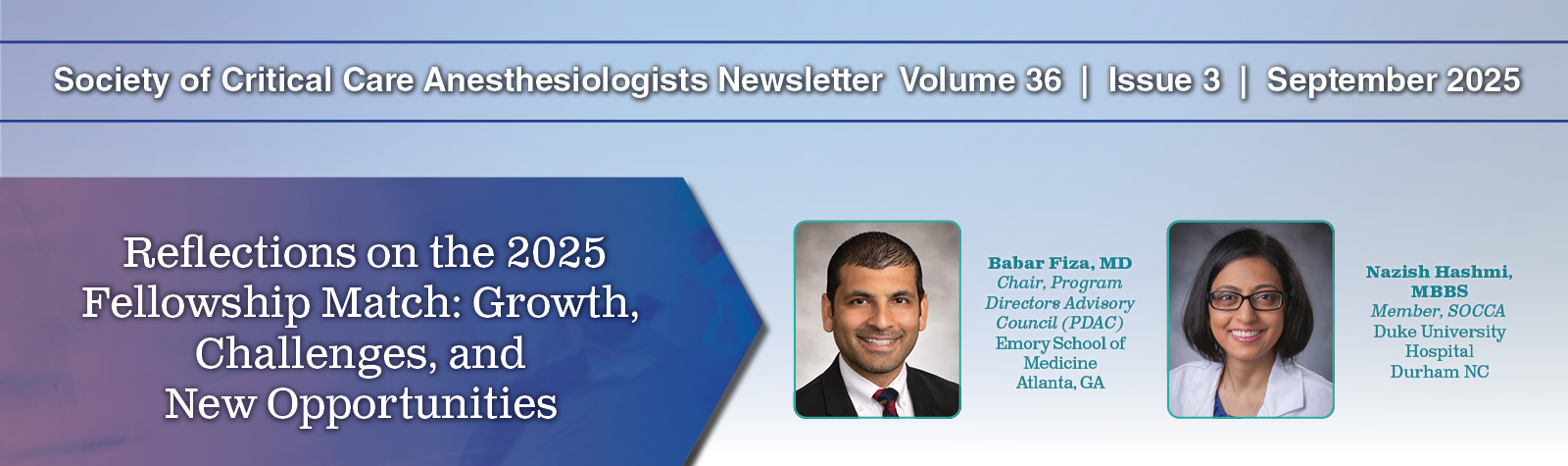
Reflections on the 2025 Fellowship Match: Growth, Challenges, and New Opportunitiesby Babar Fiza, MD and Nazish Hashmi, MBBS
The Anesthesiology Critical Care Medicine (ACCM) fellowship match continues to serve as a crucial benchmark for trainees and programs, shaping the trajectory of our specialty and ensuring a strong pipeline of future intensivists. The results of the 2025 fellowship match cycle show some interesting trends while also highlighting opportunities for ongoing vigilance and the need for proactive measures to safeguard the growth and stability of our subspecialty.
Match Cycle 2024 vs 2025
Compared to 2024, the 2025 fellowship match results show progress but also underscore ongoing challenges facing fellowship programs. In total, the number of training programs participating in the match increased from 64 in 2024 to 66 this year. However, the total number of positions offered in the match decreased slightly, from 226 to 223 (Table 1). This slight decrease is likely related to the increasing number of positions being reserved for emergency medicine (EM) applicants, which are structured as two-year tracks, potentially reducing the pool of available one-year positions. Encouragingly, the overall number of filled positions increased from 145 in 2024 to 150 during this match cycle, indicating a subtle improvement in match outcomes. However, the proportion of unfilled slots remains significant, highlighting our ongoing recruitment challenges.
Table 1. Fellowship Match Results: 2024 vs 2025
Shifts in Applicant Composition
A closer examination of the fellowship applicant pool highlights some significant directional changes. The applicant pool for the dual adult cardiac anesthesiology and critical care medicine fellowship positions overall remained stable, with a total of 25 applicants matching into the dual fellowship positions.
Since the American Board of Medical Specialties decision in 2013 to allow joint sponsorship between the American Board of Anesthesiology and the American Board of Emergency Medicine, trainees with a background in emergency medicine have had a defined pathway to obtain certification in Anesthesiology Critical Care Medicine through a 24-month training program. Over the past decade, the number of ABA-approved fellowship programs offering this two-year training pathway has grown to 46.1. The impact of the increase in available programs offering 24-month training is now evident in the rising number of EM physicians matching into ACCM fellowships, with the number of EM residents accepted into fellowships growing significantly from 39 in 2024 to 51 in 2025.
Implications for Programs and Applicants
For applicants, the match results highlight both opportunity and competitiveness. For anesthesiology applicants, a broad range of fellowship slots remains available across the country. In contrast, applicants with an emergency medicine background face a more competitive landscape, as the number of EM-designated positions, while growing, remains comparatively limited relative to demand. For programs, the increase in the EM-CCM applicant pool may favor fellowship programs that offer such positions.
Overall, the increasing number of EM trained physicians matching into ACCM fellowships will strengthen the diversity and resilience of the intensivist workforce. Yet it also introduces some fundamental structural questions: How should programs balance one-year anesthesia-based positions with two-year EM fellowships? What are the long-term implications for workforce distribution, recruitment strategies, and the educational direction of ACCM as a subspecialty? The answers to these questions are crucial for program directors and specialty leadership in the coming years, as they represent pivotal decisions that have the potential to influence the trajectory of our subspecialty.
Future Directions
The 2025 fellowship match reflects both the strength and adaptability of anesthesiology critical care medicine. Planning forward, several initiatives led by the Program Directors Advisory Council (PDAC) aim to reinforce recruitment and visibility. These include active outreach at national meetings, leveraging social media to highlight the specialty’s impact, and fostering continued innovation in education and training. Together, these efforts ensure that the fellowship match is not simply an annual endpoint but part of a larger, continuous cycle of innovation and growth.
References:
AuthorsBabar Fiza, MD Nazish Hashmi, MBBS
|